Garage Floors Built to Take Real Punishment
Polyaspartic floor coatings in Cedar Rapids for concrete surfaces showing pitting, staining, or coating failure
Ramrock Coatings LLC applies polyaspartic floor coatings in Cedar Rapids to garage slabs, patios, and sunroom floors where standard epoxy has already failed or where owners need a surface that holds up to daily automotive use without returning to a degraded state within a few years. Unlike conventional two-part epoxies, polyaspartic formulas cure fast enough to allow foot traffic within hours and full return to use in as little as 24 hours—a meaningful difference when a garage is also a workshop, storage area, or second point of entry into the home. That speed comes without sacrificing the surface hardness that makes coatings worth applying in the first place.
Every polyaspartic application at Ramrock begins with full white-out diamond grinding of the concrete substrate followed by a moisture test before any coating material is introduced. Diamond grinding removes surface laitance—the weak, dusty top layer of concrete that causes coatings to peel—and opens the concrete's pore structure so the polyaspartic bonds chemically rather than sitting on top of the slab. Skipping that step is the single most common reason garage coatings separate at the edges within a season or two. The moisture test matters equally: concrete in older Cedar Rapids properties, particularly slabs poured before modern vapor barrier practices became standard, can release enough sub-slab moisture to push a coating off the surface from below.
Arrange an on-site evaluation to review your current slab condition and determine whether surface preparation or crack remediation is needed before coating begins.
What Proper Polyaspartic Application Actually Requires
The process moves in a defined sequence: grind, test, prime if moisture readings indicate it, broadcast decorative flake if included in the system, apply the polyaspartic topcoat, and allow the specified cure window before the space returns to use. Each step depends on the one before it, and compressing that sequence—particularly by skipping the grind or rushing the topcoat onto a still-gassing substrate—produces the kind of bubbled, peeling floors that give coatings a poor reputation. The topcoat itself is formulated to resist UV-driven ambering, which is why it remains the preferred finish for open-front garages and sunrooms where direct sun exposure would yellow a standard epoxy topcoat within a single summer.
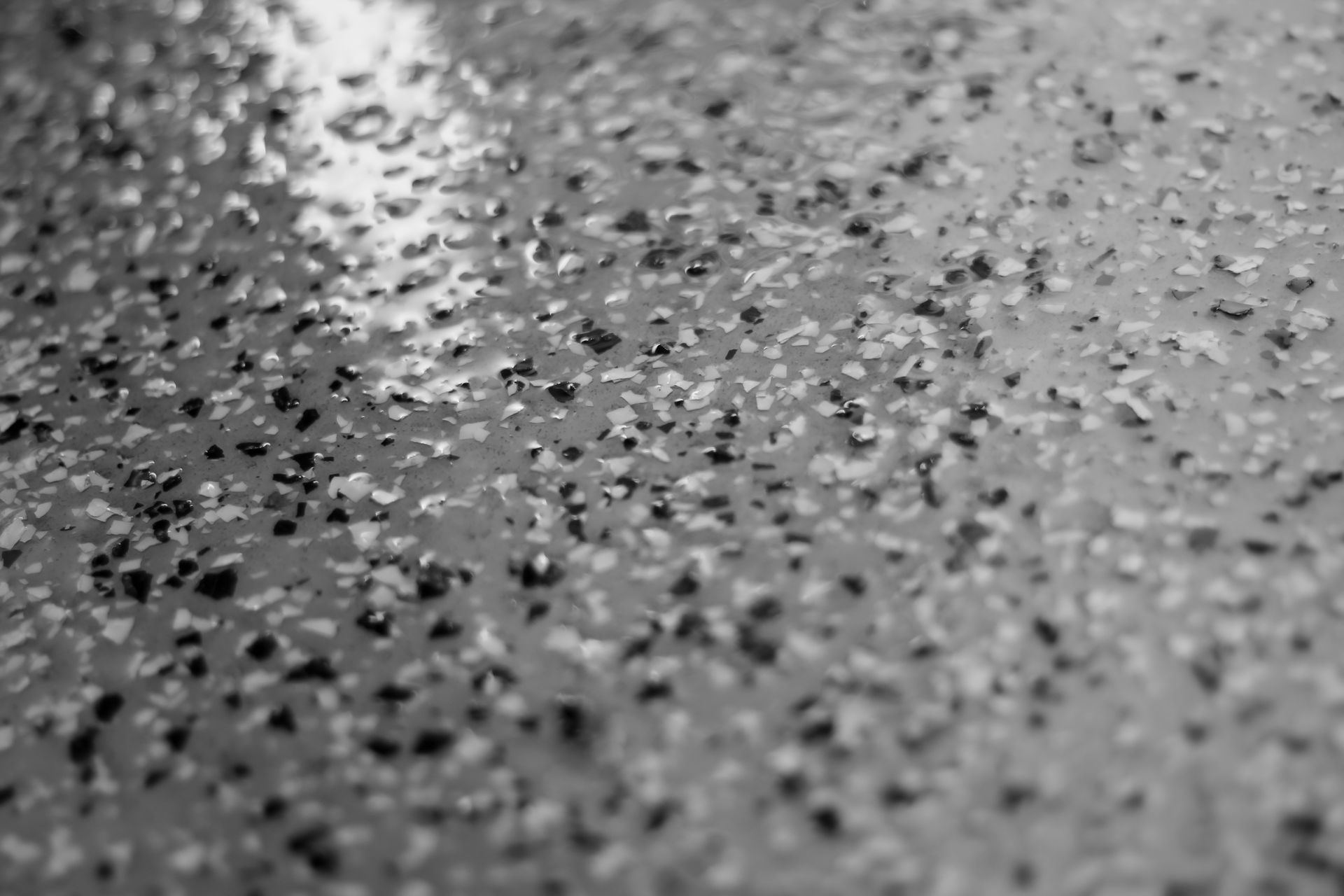
Once cured, the finished surface is non-porous, which means oil drips, automotive fluids, and garage chemicals sit on top rather than soaking in. Cleaning requires nothing beyond a sweep or a damp mop—there are no joints, seams, or texture traps where grease accumulates. Dropped tools and rolling vehicle weight do not pit or scratch the coating the way they would a standard painted surface. What you notice immediately is the high-gloss reflectivity; what you notice over time is that the floor looks the same six months later as it did the week it was installed.
Ramrock Coatings LLC uses a low-VOC polyaspartic formula, which affects air quality during application—relevant in attached garages where fumes could migrate into living space. The seamless finish also eliminates the grout lines present in tile systems, removing the maintenance burden that comes with porous grout in a chemical-heavy environment. If the slab has existing cracks, those are assessed during the initial evaluation and addressed before coating begins so they do not telegraph through the finished surface.
What Property Owners Ask About the Work
The questions below focus on how polyaspartic coatings are applied and what to expect from the process, particularly for the concrete slab types common in Cedar Rapids residential and light-commercial properties.
What is the difference between polyaspartic and epoxy floor coatings?
Polyaspartic coatings cure significantly faster than traditional epoxy systems and are formulated to resist UV-driven yellowing, making them the preferred topcoat for spaces exposed to sunlight or requiring fast return to use; epoxy, while durable, typically requires multi-day cure times and will amber under direct sun exposure without a polyaspartic or urethane topcoat.
How does diamond grinding prepare the concrete for coating?
Diamond grinding removes the weak surface layer of concrete and opens its pore structure so the coating bonds chemically to the slab rather than relying on mechanical adhesion alone; without this step, the coating rests on a layer that separates under traffic stress, which is the most common cause of premature peeling.
Why is a moisture test necessary before coating is applied?
Concrete slabs—especially those poured in older construction without sub-slab vapor barriers—can release moisture vapor that migrates upward and physically pushes a coating off the surface from beneath; testing moisture emission levels before coating determines whether a moisture-mitigating primer is needed to prevent adhesion failure.
What makes a polyaspartic coating suitable for open garages and sunrooms?
The topcoat formula is UV-stable, meaning it resists the ambering and color shift that standard epoxy develops under prolonged sunlight exposure; this stability keeps the floor looking consistent in spaces that receive direct sun through open doors or windows.
How should a coated floor be maintained once the coating has fully cured?
The seamless, non-porous surface requires only routine sweeping to remove debris and occasional damp mopping for spills; because the coating does not have joints or texture channels, automotive fluids and chemicals do not penetrate and can be wiped away without residue.
Ramrock Coatings LLC works with property owners whose existing slab needs proper preparation before a long-lasting coating system can be installed. Request a slab assessment to confirm the surface condition, moisture status, and coating system that fits your specific floor.